Mastering Positive and Negative Numbers: A Guide to Adding and Subtracting

Understanding the Basics of Positive and Negative Numbers
When it comes to math, one of the fundamental concepts that students need to grasp is how to work with positive and negative numbers. Adding and subtracting these integers can seem daunting at first, but with practice and patience, anyone can become proficient. The key to success lies in understanding the basic rules that govern the operations involving positive and negative numbers. For instance, when adding two numbers with the same sign, you simply add their absolute values and keep the sign. However, when the signs are different, you subtract the smaller absolute value from the larger one and take the sign of the number with the larger absolute value.
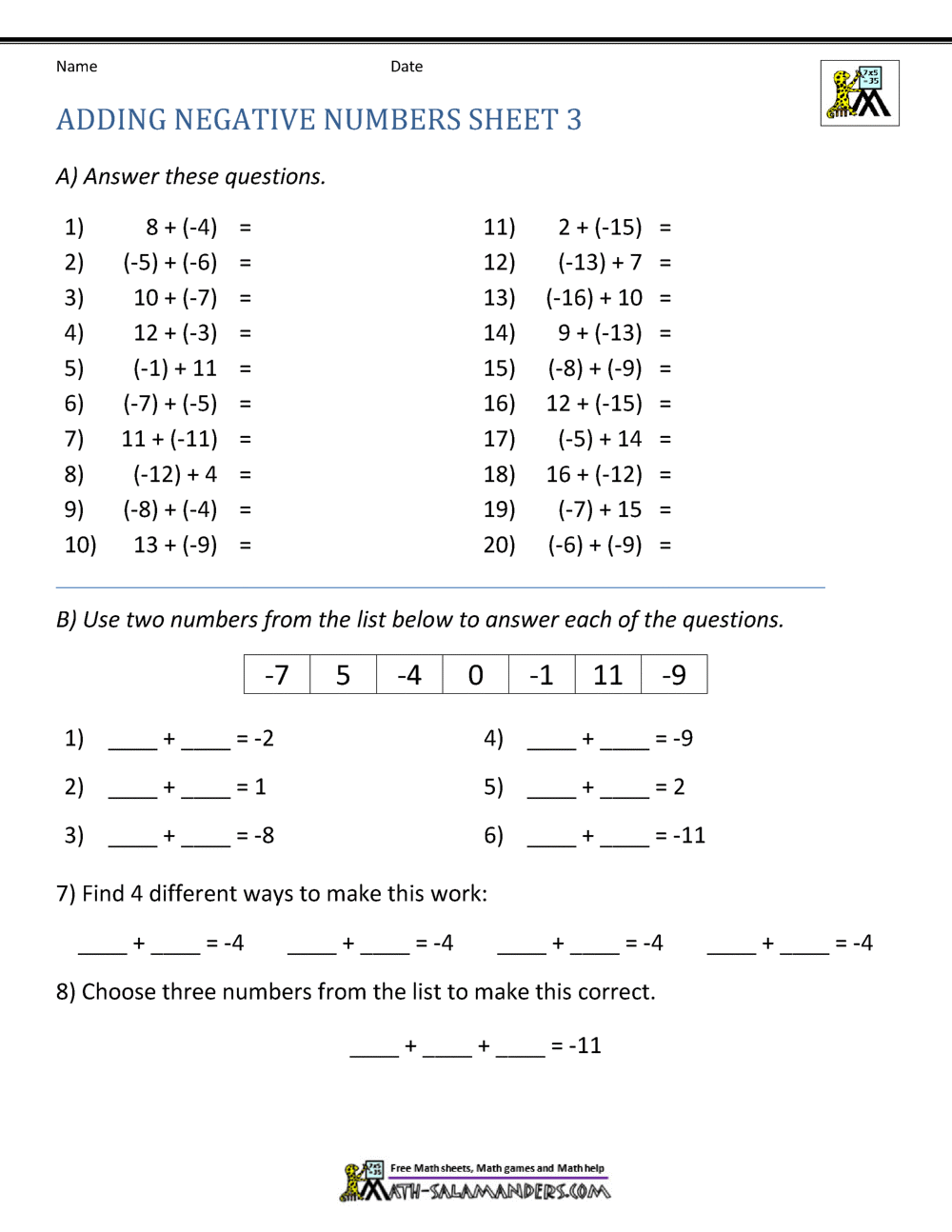
To reinforce this understanding and build confidence, using worksheets specifically designed for adding and subtracting positive and negative numbers is highly recommended. These worksheets provide a structured and methodical approach to learning, allowing students to gradually build up their skills from simple to more complex problems. By working through these exercises, students can identify patterns, solidify their grasp of the rules, and develop a sense of comfort when dealing with integers.
Practicing with Worksheets: The Key to Mastery
The concept of positive and negative numbers is not just about the rules for addition and subtraction; it's also about understanding the number line and how these numbers relate to each other. Positive numbers are to the right of zero on the number line, and negative numbers are to the left. This visual representation can help in understanding why certain rules work the way they do. For example, subtracting a negative number is equivalent to adding a positive number, a concept that can be clearly illustrated on the number line. By combining theoretical knowledge with practical exercises, students can achieve a deep understanding of these concepts.